FY26 is expected to be the next major turning point in Indian real estate, not just another fiscal year. From luxury high-rises in Mumbai to smart townships in Pune, and green-coded homes in Bengaluru, developers are gearing up for a blockbuster launch season.
But here’s the truth: not all launches are equal. Some will be short-term hype. The next ten years of returns could be determined by a select few others.
India’s real estate sector is no longer driven by speculation; it’s driven by demand and data.
According to leading property consultants, FY25 closed with over 40% year-on-year growth in housing launches, and FY26 is expected to continue that momentum, with a stronger bias toward premium and mid-luxury segments.
Home Decor
The Feel-Good Home: Designing for Emotion, Not Perfection
We spend a lot of time striving for picture-perfect interiors, with symmetrical cushions, perfect paint colours, and immaculate corners that are only found in magazines. Perfection, however, seldom feels cosy.
A home that softens the shoulders rather than dazzles the eye is truly beautiful. It’s where the light feels alive, the day slows down, and the small flaws tell tales rather than offer an apology.
Design is evolving. Comfort, connection, and tranquilly are what define the new luxury, not marble floors or simple walls.
It’s the type of house that feels like you, not just looks like you.
Designing from the Heart Outward
Before choosing furniture or paint, pause and ask:
“How do I want to feel in this space?”
That one question changes everything.
Perhaps your living room should be airy and light, a place that welcomes morning light and conversation. Maybe your bedroom should whisper calm, not clutter. Or maybe your kitchen should hum with warmth and life, not perfection.
Design ceases to be decoration and becomes a means of self-expression when emotion becomes the basis.
Imperfection Is Where the Soul Lives
The truth is, perfect homes rarely feel human.
A chipped vase. A mismatched chair. A wall that’s slightly uneven from an old paint job. These are fingerprints, not defects. They tell your story.
The feel-good home finds beauty in the imperfect and the honest. It celebrates handmade, hand-touched, and hand-me-down. It values pieces with history over things that arrived yesterday in a box.
Because comfort is about presence rather than polish.
Let Colour Do the Feeling
Colour is emotion in disguise. It shapes our energy without asking for permission.
A home that makes you feel good follows moods rather than colour trends. The shades you live with should echo the way you want your days to feel.
Textures That Speak in Whispers
A home should be a sensory experience, not a visual checklist.
Think of how a handwoven throw feels on your skin, how a clay cup warms your palms, how sunlight softens the edges of a cane chair. These aren’t design details — they’re emotional cues.
Texture adds depth to stillness. It makes the everyday tactile, intimate, and alive.
Light - The Mood-Maker
Light doesn’t just illuminate; it emotes.
Warm light calms, while cool light energises. Morning light inspires movement, evening light invites reflection. The right glow can change not just how a room looks, but how your heart beats inside it.
Layer your lighting so that daylight shines during the day and candles, lamps, and peaceful nooks take over at night. The goal is simple: comfort in every shade.
Space for Stillness
A feel-good home gives you space to pause.
It’s just a tiny area where you can breathe, not a luxurious corner or a big statement.
A chair by the window.
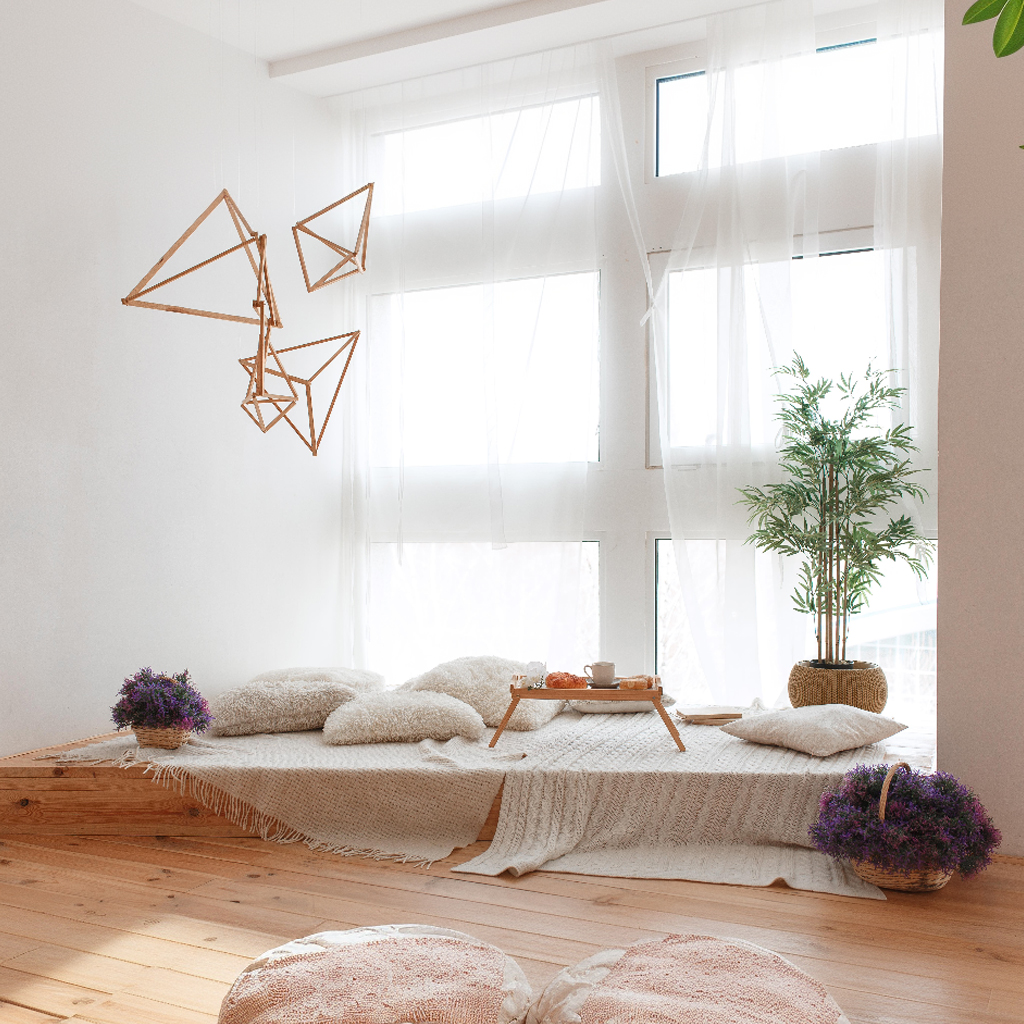
A floor cushion under soft light.
A single shelf with books that smell like old paper and peace.
These serve as emotional anchors, soft reminders that your house is an integral part of your rhythm and not merely a place to store life.
The Shift: From Display to Emotion
For years, we’ve decorated to impress, creating curated spaces for photos, guests, and validation. But more people are now designing for feeling.
They’re asking:
For years, we’ve decorated to impress, creating curated spaces for photos, guests, and validation. But more people are now designing for feeling.
They’re asking:
That’s the quiet revolution happening in homes everywhere. It’s not about less or more — it’s about meaning.
Your Feel-Good Checklist
You don’t need a makeover. You just need a mindset shift.
Here’s where
Here’s where to start:
These small, emotional edits add up to a home that feels lived in, not decorated.
The Final Thought
A feel-good home strives for kindness rather than perfection.
It’s where you drop the weight of the world at the door. Where things aren’t always polished, but always real. Where comfort lives in corners, and stories live on shelves.
Perfection is silent.
Emotion hums.
Choose the hum.
Because homes that allow you to breathe are more beautiful than those that shine.
Here’s to homes that don’t perform, they simply belong.