Fixed vs floating home loans in India: what actually works long-term
The Reality of Long-Term Effectiveness and Why It’s More Important Than Ever
Real estate reels have been scrolled by you. You’ve seen glossy loan advertisements. This is the part that nobody really discusses, though:
Your financial future may be subtly shaped for decades by your home loan.
Not next month. Not next year. Decades.
Your life, including your savings, security, and peace of mind, can be altered by every percentage point on your interest rate. This decision is more important than spreadsheets, so let’s break it down with honesty, clarity, and real consequences.
Fixed vs Floating: The Heart of the Matter
Fixed Rate: Stability You Can Sleep With
You can calculate exactly what your monthly budget will be for years. Like clockwork. No surprises.
That’s what fixed rates offer.
However, most lenders won’t shout this reality:
For that peace, you pay a higher price.
1%–2.5% more than floating rates during the initial years. That’s lakhs over a long tenure, so it’s not a tiny change.
Thus, comfort comes at a price.
Your EMIs may decrease when the Reserve Bank lowers interest rates, as it did in 2025, saving you money each month. That movement is a potential advantage rather than a bug. However, and this is crucial, it can also go upward. Your spending plan needs to adapt to the market.
If you’re prepared for that, you could:
That is the documented behaviour of Indian home loans over rate cycles, not a theory.
Here’s the Hard Truth
There isn’t a universal “better.” There’s only what’s better for you. Let’s be frank about the times when each of them truly shines.
The floating rate prevails if:
You’re not just creating a budget; you’re creating wealth.
Instead of being afraid of changes in the market, you are prepared to react to them.
You wish to pay off the loan early or refinance.
The lowest possible long-term cost is what you want.
Floating has a significant advantage in a slowing rate environment, such as India’s following several repo cuts. You’re taking advantage of market forces rather than placing a wager against stability.
Knowing exactly what you owe is extremely valuable, particularly if life is already full of surprises.
The Reality Most Borrowers Miss
This isn’t always easy with banks.
What Should You Do, Then?
Rather than asking:
“What’s better?”
Ask:
“Which fits my life, my risk tolerance, and my objectives?”
Because the appropriate loan is not a loan at all.
It is a partner in finance.
Bottom Line: This Is a Strategy, Not a Guess
Selecting the best option for your stage of life is more important than selecting the “safest” option when deciding between fixed and floating interest rates. Over time, floating rates frequently prove to be more cost-effective, particularly when interest rates are easing. This approach can discreetly save you lakhs over time if you have the emotional capacity to deal with market swings and income growth on your side.
Conversely, fixed rates give you assurance. They provide you with peace of mind and safeguard your monthly budget from unforeseen expenses, which spreadsheets are unable to measure. Paying more for predictability can be a smart choice rather than an expensive one if stability is more important than marginal savings.
Selecting fixed or floating is not the true error; making a blind decision is. Read the fine print. Understand reset clauses. Know when and how your rate can change. Because your home loan is a long-term partnership rather than merely a financial product.
Choose it the way you’d choose a life partner: with clarity, honesty, and foresight.
Home Decor
Transition Decor: Moving from Winter Warmth to Spring Freshness
There’s a quiet moment every year when your home feels just different. The heavy blankets stay folded a little longer. Sunlight lingers on your walls in the afternoon. Windows wish to be opened again. It’s as if your space itself is stretching after a long winter nap.
You may have felt a subtle restlessness. A craving for lightness. For colour. For air that smells like new beginnings. This is your house requesting a seasonal makeover, not a drastic overhaul, but a deliberate update that reflects your inner and external life.
Honouring that transitional period, when winter hasn’t completely passed and spring hasn’t fully arrived, is the goal of transition decor. It’s about gently, purposefully, and beautifully easing your space into the new season in the same way that you ease yourself into happier days.
Swap Weighty Comfort for Airy Ease
Winter is all heavy fabrics: deep velvet throws, thick rugs, blackout curtains that cocoon you. But as the sky lightens, so should your textiles.
Throw away the weight by substituting sheer linens that dance with the breeze, textured cotton quilts, and layers of linen and cotton for woollen throws. These fabrics instantly let in light, reduce visual heaviness, and whisper of spring breezes even before the temperature fully warms up.
Light-soaked spaces feel psychologically fresher, and letting the sun play across lighter fabrics elevates mood like nothing else.
Paint with the Palette of the Season
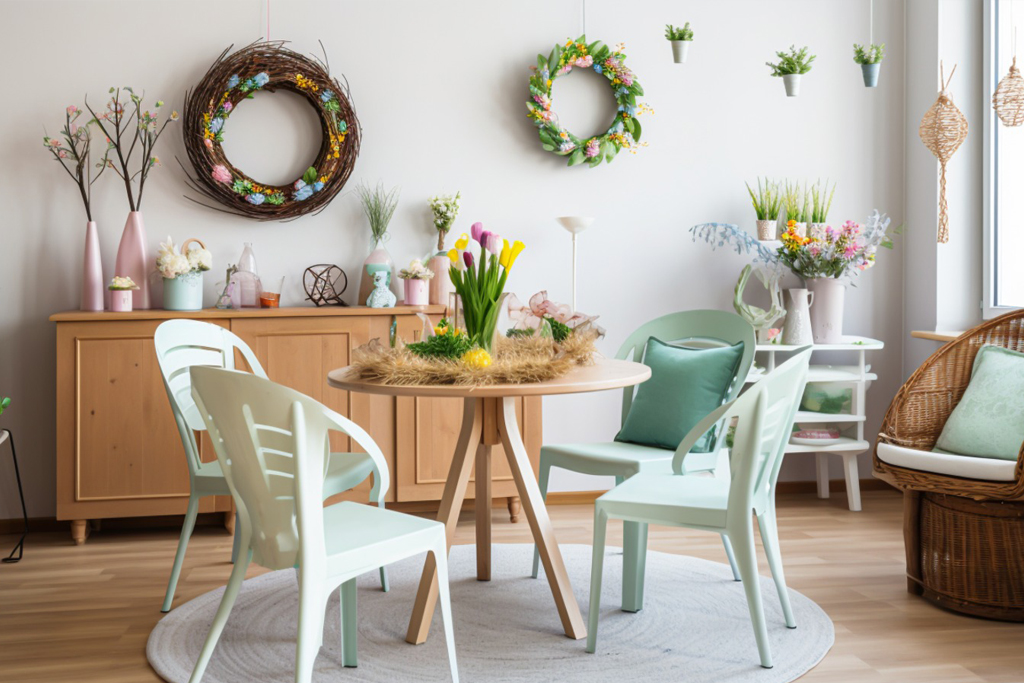
Spring’s colour story is soft, breathable, and full of nuanced life. Consider hues that resemble fresh leaf buds and early morning skies, such as mint greens, blush pinks, pale blues, and lemony neutrals. These tones are gaining traction among designers this year because they offer calm and optimism without being loud or overwhelming.
Sometimes a new set of cushion covers, a collection of pastel vases, or a single accent wall can provide the same uplift as painting an entire room.
Let Nature Steal the Show
Nothing announces spring like greenery. Ferns, succulents, and spider plants are examples of indoor plants that are more than just ornamental; they enhance life energy and purify the air in your spaces.
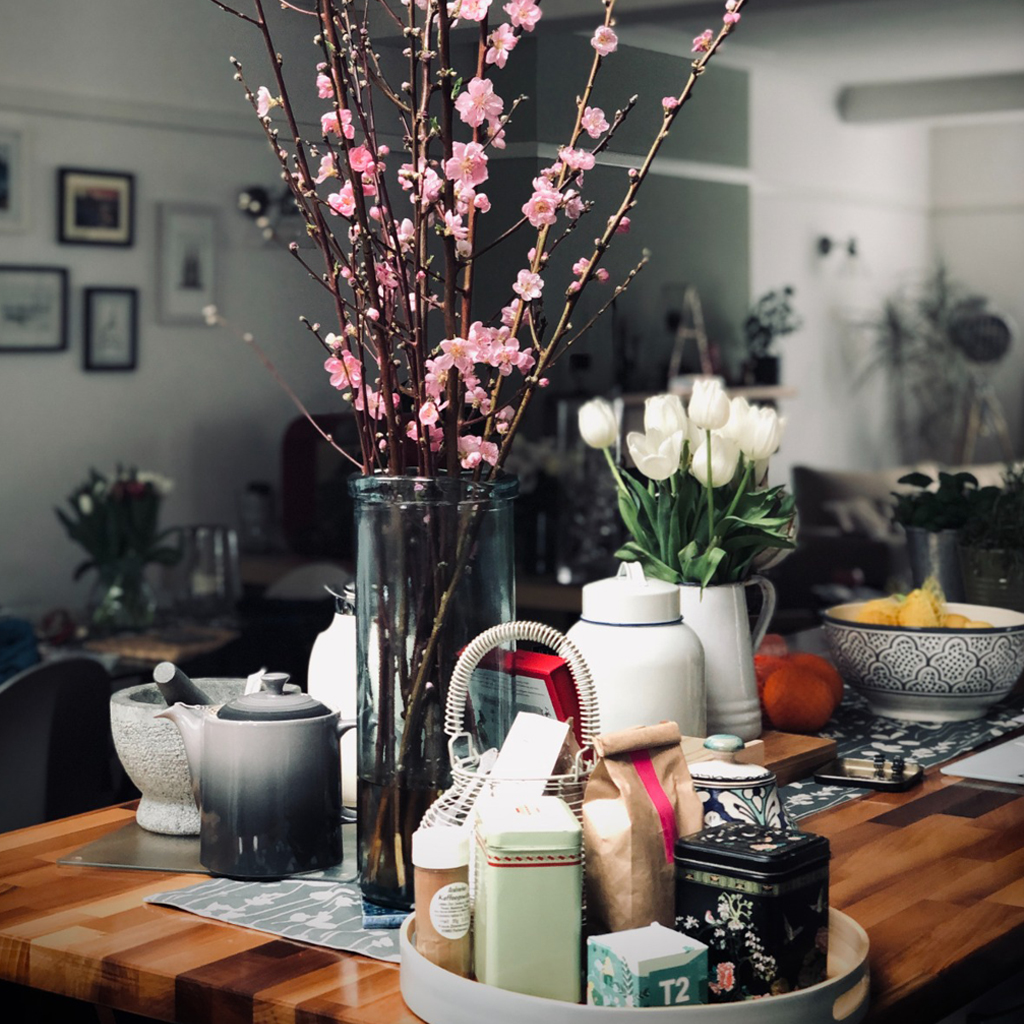
Furthermore, you can bring in early flowers from markets if the gardens aren’t ready for blooms yet. Tulips, daffodils, and hyacinths in spotless glass vases quickly transform your space from the stillness of winter to the vitality of spring.
Think carefully and arrange clusters in strategic groups instead of dispersing them randomly. Micro-gardens, such as a small orchid on a bedside table, a herb pot on your kitchen sill, or a lush corner by a window, can completely change how you feel at home.
Rethink Light and Energy
Winter is often about warm lamps and cosy corners. Natural light should be your focal point in the spring.
Draw back bulky curtains. Replace them with sheer curtains that let sunlight flood rooms. Mirrors positioned to catch that light will double its impact, making interiors feel larger and more alive. You’re rediscovering your house in the light of a new season, not merely decorating.
Refresh Your Stories: Not Just Your Stuff
Warmth was probably reflected in last winter’s artwork and décor, which included images that anchored mood, layered patterns, and rich landscapes. Now take another look at shelves and walls using a spring lens:
This change can be achieved by simply reframing what you already have rather than purchasing new items.
Don’t Forget the Senses
Spring has an aroma as well as a visual appeal. Use candles or diffusers to replace winter scents (such as cinnamon and amber) with light citrus, jasmine, or delicate linen scents. Your space becomes experientially renewed instead of just “updated” as a result.
Bottom Line: This Shift Is Emotional Before It’s Aesthetic
This seasonal transition isn’t about ticking boxes. It’s about creating an atmosphere of openness, clarity, and awakening. You’re not just changing cushions. You’re easing out of winter’s introspection and making room for spring’s energy.
Let lighter fabrics replace heaviness. Let the outside world be echoed with new hues. Let natural light be the hero. And let your home feel like a breath of fresh air.
Because design is more than just what you see; it’s also how a space feels when you enter it.